
SSNS 2026 Day Conference
We are happy to announce our next in-person conference at 12:30 GMT on 28th November in the Scottish Borders at Darnick Village Hall.
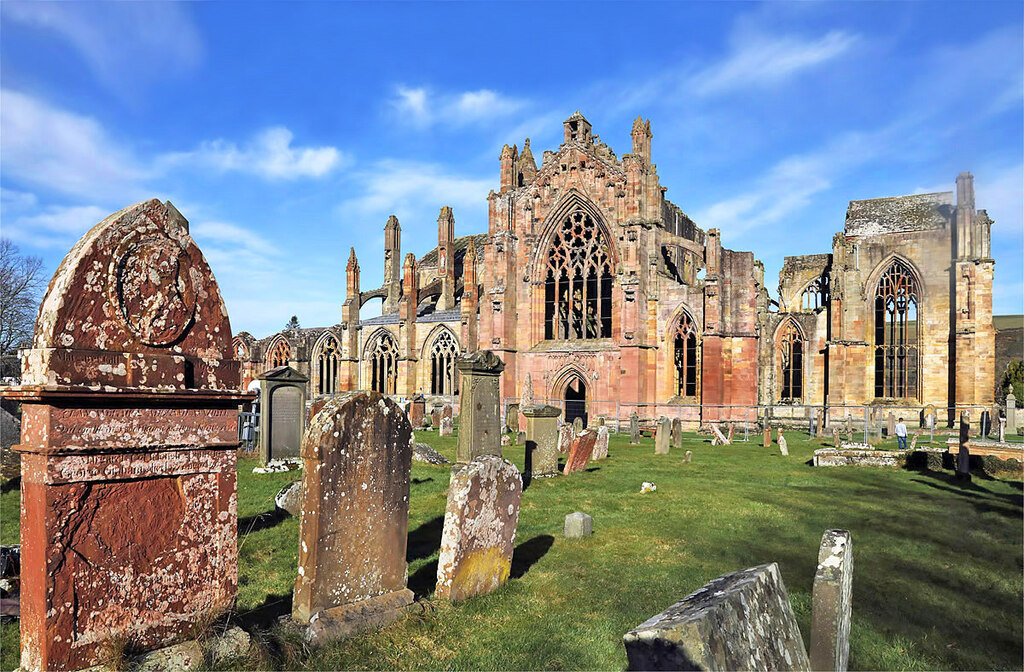
Prior to the conference, there will be a guided tour of nearby Melrose Abbey at 10:30 GMT, offered with a discounted rate of £5 to access the abbey (normally £7.50). Those who wish to attend the guided tour, please sign-up by adding the option to your registration below. Members of Historic Scotland can enter free of charge (along with Explorer Pass holders as well as life members of English Heritage, Cadw, and Manx National Heritage).
For paid-up SSNS members, the AGM itself will be held from 19:00 – 20:30 GMT on Wednesday the 25th of November on the Zoom platform. Details for the AGM will be released to members on the 19th Nov. 2025. We ask for members to check their emails for the related details.
CONFERENCE SCHEDULE (10:30-17:00)
-
- 10:30 Guided Tour of Melrose Abbey (Abbey St, Melrose, TD6 9LG)
-
- 12:30 Arrive at Darnick Village Hall, Abbotsford Rd, Melrose, TD6 9AH
- REGISTRATION
- LUNCH
- 12:30 Arrive at Darnick Village Hall, Abbotsford Rd, Melrose, TD6 9AH
-
- 13:30 Welcome & Housekeeping: Dr Alan Macniven
-
- 13:35 Professor Jackson Armstrong, The University of Aberdeen
-
- ‘Were there Cross-Border Surnames in the Fifteenth Century Anglo-Scottish Marches?
-
- 13:35 Professor Jackson Armstrong, The University of Aberdeen
-
- 14:15 Dr Brigid Ehrmantraut, The University of St Andrews
-
- ‘Trading in Druids: Druids from Medieval Gaelic Literature to Trade Publishing’
-
- 14:15 Dr Brigid Ehrmantraut, The University of St Andrews
-
- 14:55 COFFEE
-
- 15:15 Dr Neil McGuigan, The University of St Andrews
-
- ‘Recovering the history of 11th-century Southforthia’
-
- 15:15 Dr Neil McGuigan, The University of St Andrews
-
- 15:55 Hermann Pálsson Memorial Lecture: Professor David Griffiths, The University of Oxford
-
- ‘“Ravages of Heathen Men”: Vikings in Antiquarian and Modern Scholarship’
-
- 15:55 Hermann Pálsson Memorial Lecture: Professor David Griffiths, The University of Oxford
-
- 16:55 Summing-up:
-
- 17:00 Fin
SPEAKERS – abstracts & biographies
Professor Jackson Armstrong, The University of Aberdeen
Title: Were there Cross-Border Surnames in the Fifteenth Century Anglo-Scottish Marches?”
Abstract: This talk explores the origins of the Riding Surnames who were so prominent among the so-called Border Reivers in the sixteenth century. It considers what evidence survives for kinship groups in these Borderlands in the later middle ages, and in particular looks at indications of kinship links reaching across the border in that earlier period. In this way the talk addresses how changing ideas of kinship were understood and recorded in a dynamic and sometimes turbulent region.
Bio: Jackson Armstrong is a historian of Scotland and England, principally of the later middle ages. He joined the University of Aberdeen in 2008, and earned a Personal Chair in History in 2023, when he also took up the role of Head of History. His books include England’s Northern Frontier (2020), which was joint winner of the Royal Historical Society’s Whitfield Prize.
Dr Brigid Ehrmantraut, The University of St Andrews
Title: Trading in Druids: Druids from Medieval Gaelic Literature to Trade Publishing
Abstract: This talk considers perceptions and portrayals of Druids across time. I examine influences on medieval Gaelic depictions of Druids, including the degree to which Classical Greco-Roman ethnographic writing about Druids may (or may not) have influenced later medieval ideas about what pre-Christian Druids were and did. I also reflect on my own experiences presenting medieval Druids to popular audiences through trade publishing.
Bio: Brigid Ehrmantraut is Associate Lecturer in Latin and History of the British Isles, c. 1100–1500 at the University of St Andrews. She holds a PhD and MPhil in Anglo-Saxon, Norse and Celtic from the University of Cambridge and an AB in Classics from Princeton University. Her monograph, Classical Myth in Medieval Ireland appeared with Boydell and Brewer last year (2025). Her trade book, Celtic Magic: A Practitioner’s Guide was published by Thames and Hudson this spring. Her research focusses primarily on medieval Celtic languages and literatures, classical reception in the Middle Ages, and intellectual history.
Dr Neil McGuigan, The University of St Andrews
Title: Recovering the history of 11th-century Southforthia
Abstract: Most of the common reconstructions of the history of what is now Scotland south of the Forth in the period before 1100 draw upon very loose conjecture that has, in the retelling, grown arms and legs and turned into factoid. In this paper I will examine some of these factoids. I will also look at recent work on the topic., including my own on the ‘earldom of Bamburgh’ and its dissolution in the later 11th century.
Bio: Neil McGuigan’s research focuses heavily on the politics, borders, and church structures of northern Britain and Northumbria between 800 and 1200. He is the author of Máel Coluim III, ‘Canmore’: An Eleventh-Century Scottish King (2021), which explored the life, times and afterlife of the king and associated historical problems. The monograph won the 2023 Frank Watson Book Prize for the best original work on Scottish history published over the preceding two years. He has also edited a collective volume on the Millennium of the battle of Carham, and is working on books about the Picts and the Canmore era of Scottish history. He currently organizes and lectures on Combined Studies Scottish and Medieval History modules at the University of St Andrews, where he received his PhD back in 2015.
THE HERMANN PÁLSSON MEMORIAL LECTURE
Professor David Griffiths, The University of Oxford
Title: ‘Ravages of Heathen Men’: Vikings in Antiquarian and Modern Scholarship.
Abstract: This quote is of course from the description in the Anglo-Saxon Chronicle of the raid on Lindisfarne in June 793, which we now think of as the opening event of the Viking Age. Vikings have today become a cultural behemoth, near-universally perceived as violent, pagan, warlike, Nordic and male. Most recently seen in the fans’ support for the Norwegian team in the football world cup, their reputation as terrifying seaborne marauders has popular appeal across the world. The creation of this image is largely attributable to popularisation in the nineteenth century by writers, artists and translators, amongst whom none was as influential as the Borders’ own Sir Walter Scott. Close on the heels of Scott’s era, historians and archaeologists began to reframe the Vikings as a colonial master-race, suiting the outlook of contemporary Scandinavian nationalism.
How close is this myth to reality? Without entirely dismissing the ravages of heathen men, modern scholarship has significantly altered the ways in which we see the Viking Age. We can now see there was much greater cultural interchange in the Viking Age, and that the traffic was not just one-way. One by one, the old stereotypes are falling. This is to be welcomed, but how does it affect our interpretation of the actual evidence? Concentrating on Northern and Western Britain, from the Irish Sea to the Northern Isles, this lecture will review the influence of older and more recent scholarship on how we understand the Viking Age, and offer some rethinking of the enduring impact of the Vikings upon our islands.
Bio: David Griffiths is Professor of Archaeology at Oxford University, where he is responsible for the Archaeology Continuing Education teaching programme. He is also a Visiting Professor in Northern Studies at the University of the Highlands and Islands. He studied history and archaeology at Durham University, and spent time as a visiting researcher in Norway. He has written extensively on the early medieval Irish Sea region, including his book Vikings of the Irish Sea, recently revised and updated (History Press 2025) and has led a major field project in Orkney published as Beside the Ocean (Oxbow, 2019). He held the Newlands Visitorship at Glasgow University, and for a number of years was external examiner in Archaeology at the University of Aberdeen. He is currently working on a new book about the Picts and Vikings.